
How Diri Lavi! Is Strengthening Farmers, Families, and Haiti’s Future
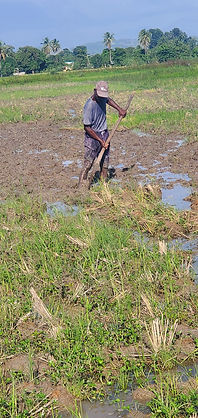
This past year has tested the strength and resilience of communities across southern Haiti like never before. When Hurricane Melissa struck, it threatened to devastatingly crush an already fragile agricultural infrastructure. Crops in the ground and those waiting to go to market were vulnerable to total destruction. For families whose livelihoods and hopes depend on farming, the losses could have been catastrophic.
In rural areas of Haiti, where agriculture is the cornerstone of existence, farmers were desperate for a solution to break the usual cycle of loss and dependence that follows natural disasters. Communities faced the terrifying uncertainty of how they would access food after the storm. In moments like these, the threat of perpetuating long-term dependence on foreign aid is a harsh reality.
But amidst the devastation experienced in other parts of Haiti, something remarkable happened in southern Haiti. Something that pointed toward a more sustainable, self-reliant future for Haiti. Through Diri Lavi!, Overture's innovative food-packaging initiative, farmers received not only immediate support, but also a new path toward economic independence and communities were fed by their own resources and people, not outside aid.
From Crisis to Opportunity for Farmers
As Hurricane Melissa approached, many farmers feared losing everything: the crops they had invested so much time and energy to grow, the income they depended on, and the food their communities needed. Fields full of rice and beans were at risk of being wiped out.

In the face of potential disaster, local Overture teams acted quickly. Thanks to donor support and established partnerships through Diri Lavi!, we were able to purchase significant amounts of rice and beans directly from local farmers before the storm hit and destroyed the crops.
This strategic, rapid response accomplished two important outcomes:
It saved farmers’ crops from being destroyed, preserving the income they desperately needed.
It ensured an immediate stockpile of locally grown food, allowing us to feed vulnerable communities during the crisis through the Diri Lavi! program without relying on delayed or uncertain foreign aid.

This is what sustainable development looks like in action. This is what it looks like to build Haiti Stronger! Farmers who once feared devastating losses instead received fair, timely compensation for their crops. Families who might otherwise have gone hungry were able to access meals quickly thanks to Diri Lavi! and the community members employed there. And at a time when Haiti’s supply chains were disrupted, local agriculture - not imported aid - kept communities nourished.
Nutrition Feeds Independence
In the wake of Hurricane Melissa, the consequences of over-reliance on foreign imports were brought into the light even more vividly. For decades, Haitian farmers have struggled to compete with low-cost imported rice and other staples - products that Haiti can and should be producing on its own.
When imports dominate the market, local farmers cannot earn a sustainable income, families remain vulnerable to supply chain disruptions, and entire communities are forced into dependency rather than empowered toward stability.
But the Diri Lavi! model flips this narrative by rooting the solution in Haiti itself.
To learn more about the history and evolution of Haiti’s agricultural economy, you can read our past blog on the subject here.

Your support fuels a local economy where farmers are valued, paid fairly and consistently, and are actually able to plan for the future. It ensures that even in emergencies, food is available - grown, purchased, packaged, and distributed locally, by local community members for their neighbors. Instead of waiting for aid that may or may not come, communities are nourished from within.

Since Hurricane Melissa, Diri Lavi! has allowed Overture teams in Haiti to distribute more than 65,000 meals to vulnerable areas like Jeremie, Tiburon, and Dory. We’ve also been able to feed reunified families, foster homes, and even youth and women inside the Les Cayes prison, providing vital nutrition to those who need it most.
Replanting, Rebuilding, and Growing Haiti Stronger

The journey to recovery after Hurricane Melissa is far from complete. Many farmers were unable to harvest their crops in time and lost an entire planting cycle as well as any stored harvests. Many of them also lost the tools they rely on to manage their farm. But the seeds of resilience are already being planted.
Through ongoing investments, Overture will:
Empower farmers to replant their crops and restore their livelihoods.
Restock our supply of locally grown rice and beans for future packaging (and the next, inevitable disaster).
Expand the reach of the Diri Lavi! program into more communities.
Strengthen our Community Farming initiative, deepening long-term agricultural infrastructure.
Each step reduces Haiti’s dependence on outside aid. Each farmer empowered strengthens the local economy. Each meal packaged nourishes not just families, but entire communities.
Join Us in Growing a Stronger Haiti
The impact of Diri Lavi! over the past few years have been profound - not only in emergency response but in the sustainable transformation of Haiti’s food ecosystem.
Investments in Overture and Diri Lavi! are investments in Haitian farmers, local economies, and long-term solutions that build self-reliance in a country where dependence was the status quo. Together, we are building resilience into the infrastructure of communities that are committed to doing the work they need to do to transform their region and country.

Roslene Duval, a mother of two, shared a moving testimony after receiving support following the hurricane:
"I feel very good because we had nothing in the house for our supper. It is a great blessing for us. I prayed fervently for you before you left. God sent this blessing to us, and I thank you. The situation was really difficult for us after the cyclone. Our gardens were devastated. We have nothing left. We lost everything."
You are helping Haiti steadily move from dependency to self-reliance. Together, we are building Haiti Stronger—one meal, one crop, one farmer at a time.


